Protecting Contracts & Documents from Leaks
A contract that leaks outside the organization does more than expose data. It can damage an active negotiation, a client relationship, and sometimes the value of a deal close to signing. By the time someone asks who leaked a specific copy, the question usually comes too late. This is where document management systems show their real role: a protection layer around the document itself, beyond the digital archive.
Where leaks usually begin
Most leaks do not start with a sophisticated technical attack. They come from routine behavior: an employee emails a file to a personal account to finish work from home, copies a file before leaving the company, or shares a contract with an outside party without controls over what happens next. Ordinary email leaves no useful trail after sending, prevents nothing, and does not show who opened the file, so copies multiply without anyone knowing how many are outside or where they went.
As an organization grows and its branches and contracts multiply, tracking who holds a copy of a given contract becomes impossible by hand. The answer is not to block sharing entirely, since work requires it, but to turn sharing into a documented, controlled process. The difference between "blocking sharing" and "governing sharing" is the difference between a policy broken every day and one enforced inside the workflow itself.
The protection layers the system provides
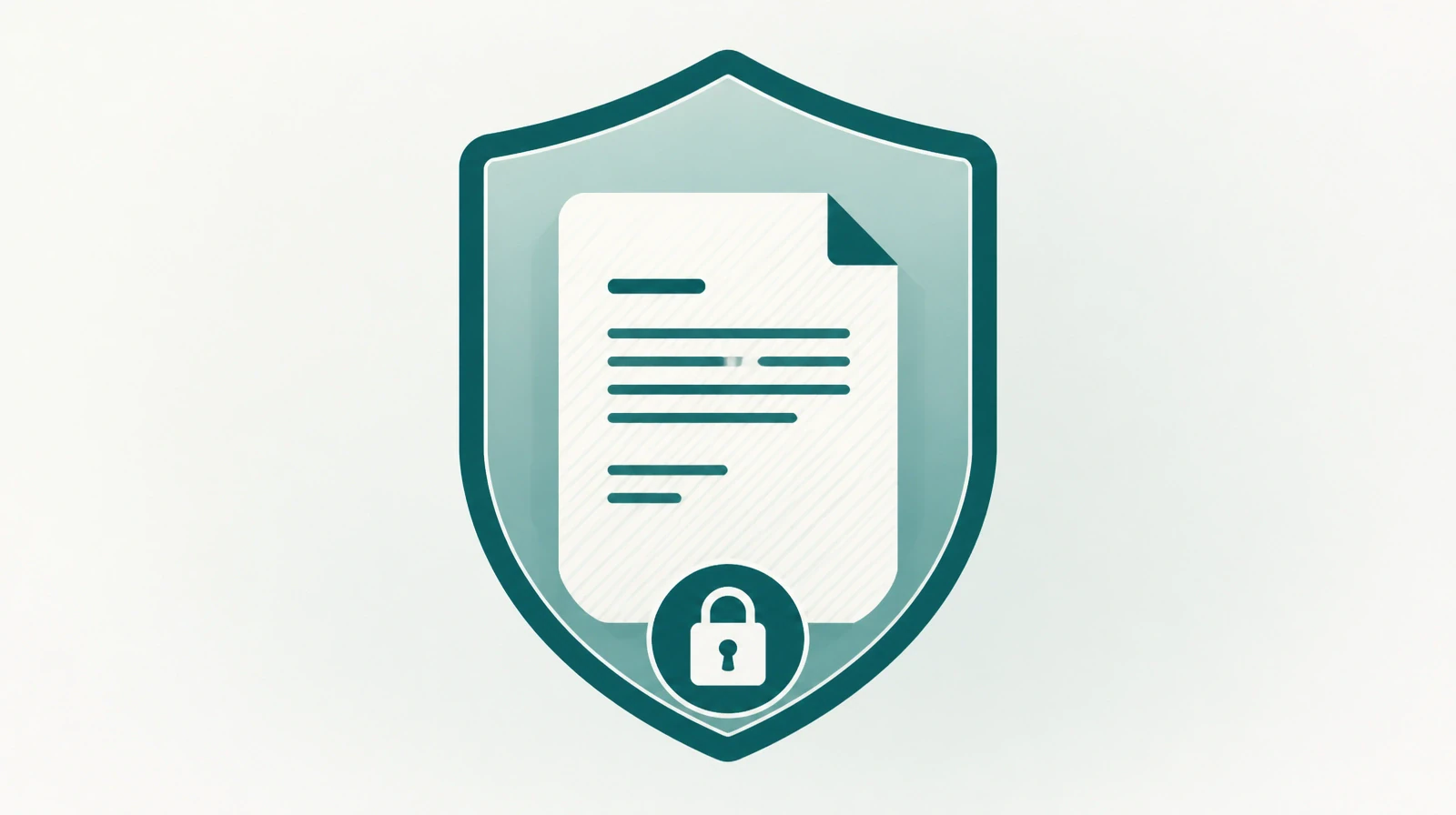
A good system in this category does not stop at "a place to store files"; it controls how users handle the document after it reaches them. The foundation is watermarks: every copy leaving the system carries a mark tying it to its holder. This does not mean copies will never leak; it means the source of any leak can be identified, which is a strong deterrent on its own. When a user knows their copy carries their name, they think twice before sending it through personal email or uploading it to an external drive, so the psychological deterrent comes before the need for monitoring.
Secure sharing completes that layer: an outside party gets access through a tightly permissioned link instead of an open email attachment, with control over who can view it and whether downloading or printing is allowed. An emailed attachment leaves the organization's hands for good, while a protected link stays under its control: it can be revoked when needed, its permissions can be changed, and reports show who opened it and who did not.
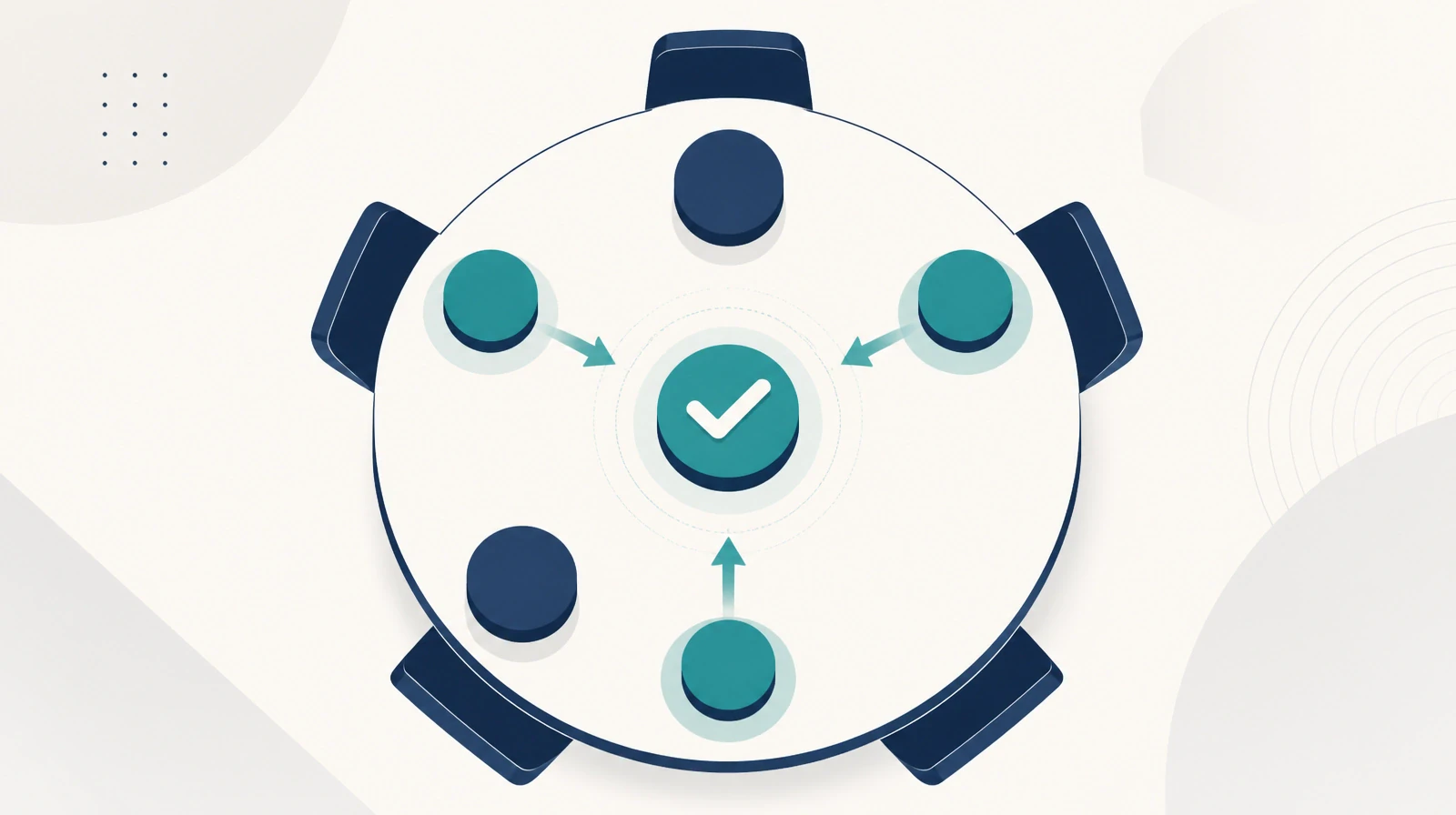
Then come approval flows: the document moves from drafter to reviewer to approver along a defined path, so it does not reach signing until its steps are complete. This path ensures that the contract passed every required gate before approval, and that everyone who took part in the review is known and recorded. When someone asks "who approved this clause?", the answer is available, not missing.
Full-text search adds another layer: fast access to a clause inside thousands of contracts without opening each file by hand. This capability reduces the need for scattered local copies. When an employee can quickly find the clause inside the system, there is no need for the "backup copy" kept on a device, so unmonitored copies decline on their own.
Taken together, these capabilities reduce the leak surface from two directions: every copy can be tied to its holder, and fewer original copies circulate outside the system.
Why this matters in the Saudi institutional context
Many organizations in the Kingdom deal in long-running contracts: real estate development projects, supply agreements, operation and management contracts. The parties to these contracts can be numerous, and subcontractors, legal advisors, and banks may each need a copy. Without a system governing that distribution, copies multiply and slip out of control, and an officer may find years later that they cannot determine who holds a copy of an old contract still in force.
Internal and external audit requirements also demand a higher standard of proof over document control. When an auditor asks for a record of who viewed a given contract, having that log turns the answer from a guess into a documented fact. The difference between "I think so-and-so saw it" and "so-and-so viewed it on this date at this time" is the difference between an audit that doubts its findings and one grounded in evidence.
What to watch for
A document management system does not protect anything by itself if people only partly follow it. A common scenario: contracts are uploaded to the system, then copied out to shared folders because access is "easier". At that point the protection layer loses its value because the real copies now sit outside control, and the advanced system becomes just a second copy nobody trusts.
The practical test for choosing a system is how easily it fits daily work. A system that creates friction at every step will be bypassed; one that builds protection into the workflow itself gets used and trusted. The real test is not the feature list but a single question: when an employee needs to share a contract with an outside advisor, do they find an easier path inside the system than through open email? If not, they will use open email no matter what the written policy says.
Start with a simple inventory
Document protection starts with a simple inventory: where are your contracts stored today? How many copies sit outside the official system? Who has direct access rights? On that basis, you define what you need: watermarks on every download, external-sharing controls, or both.
Warqa from Renewable Systems is built for document and contract management with leak protection built in, using watermarks, secure sharing, and approval flows. To see how protection intersects with artificial intelligence on those same documents, putting AI to work in document management completes the picture, opening another way to use content without loosening access controls.
Real protection means keeping everyone who reaches the document known, and leaving their copy as a trace that leads back to them.