Asset Custody & Offboarding Recovery
When an employee leaves, a race against time begins. The organization must recover what is in their custody before their file closes: a laptop, an ID card, an office key, perhaps a higher-value asset. Every day of delay raises the odds of loss. This is the moment where asset management systems show their real value: an inventory log alone is not enough; what is needed is a recovery control that works before the file closes.
What makes offboarding a moment of risk
Loss rarely happens through bad intent. It happens because there is no single list. IT issued the laptop, security issued the card, administration handed over the office, and perhaps a field tool was assigned from a branch warehouse. Each unit logs its custody in its own way, in its own system, so on the day of departure nobody holds the full picture.
The result is familiar: the employee is cleared before returning everything, a missing item turns up later, and a phone chase begins that may end nowhere. The cost goes beyond the item's value to the time spent tracking it, and the security gap if the item carried data. It can also end with the experience certificate or final dues held pending custody clearance, sparking a side dispute that strains both sides for no good reason.
How the system follows custody through its lifecycle
This category of system goes past the idea of an "annual inventory" to following custody across the employee's full lifecycle. The core of this shift is digital custody tracking: every asset is assigned to a specific employee with a clear record of when they received it and when it should return. That record is not just a table; it is what turns custody from a personal relationship between the employee and the item into a documented relationship between the employee and the organization.
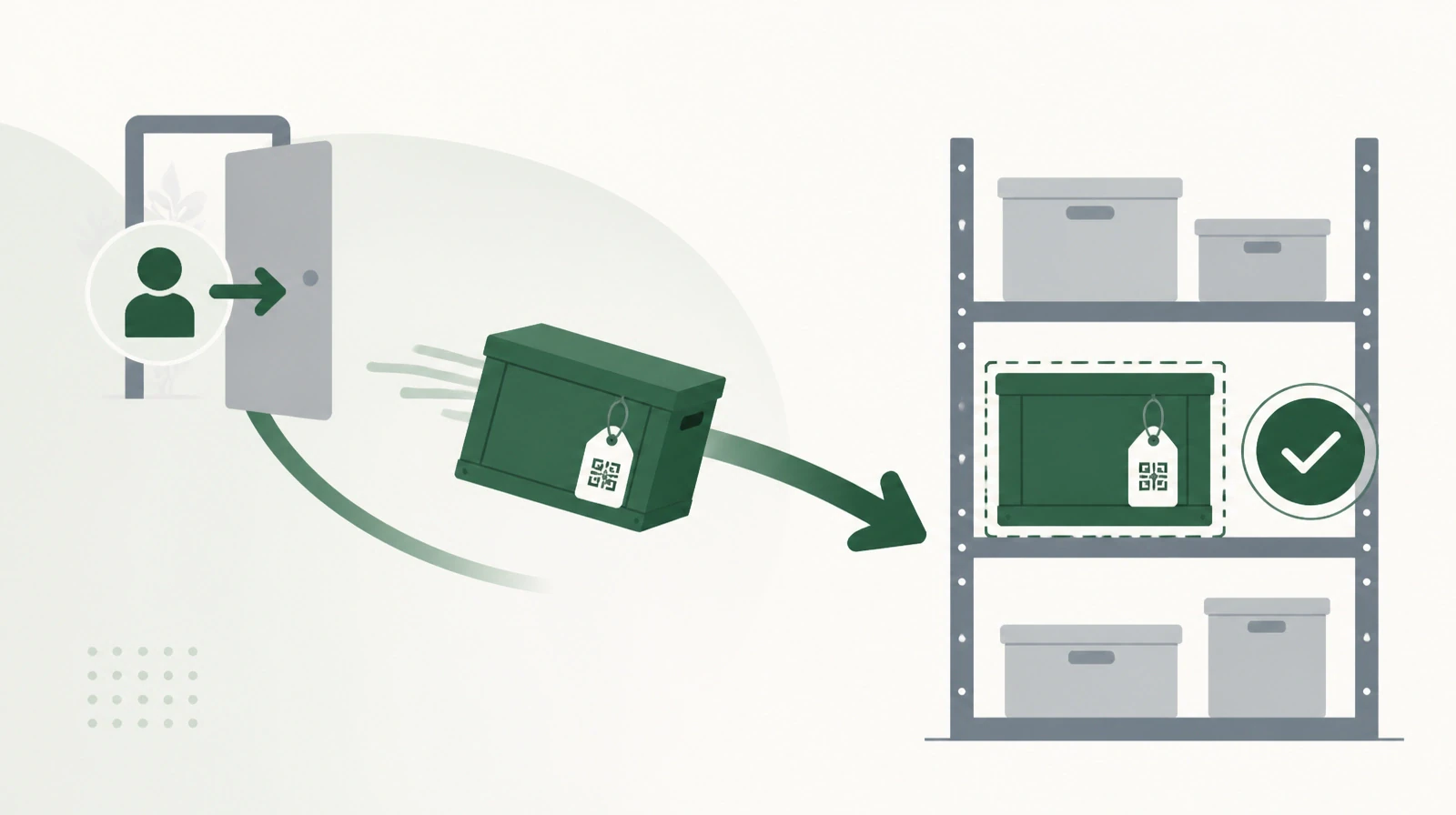
On that foundation, offboarding recovery is built. When the departure file opens, the system automatically generates a list of everything in the employee's custody, and final clearance is not authorized until it is settled item by item. What was a chase becomes an organized checklist, and the employee shifts from being pursued to following a clear procedure in front of them.
Daily logging, in turn, relies on QR and barcode scanning. Handover and return are recorded by scan, leaving no room for manual error or forgetting. This detail is what keeps the record alive: a system updated only at the annual inventory is a dead system, whereas one where every handover and return is scanned becomes a precise reflection of reality.
In geographically distributed organizations, a multi-location dimension is added: custody is managed per branch with a unified central view, so headquarters knows what is in custody at a remote branch without waiting for a monthly report.
The direct impact goes beyond reducing loss: it turns the moment of departure from an emergency into a routine procedure. And once the procedure is routine, the pressure lifts off both the administrator and the employee.
When the record stays alive, and when it dies
A custody system fails when it is updated once at installation and then left alone. A static record that does not reflect reality is worse than no record, because it implicates its owner in wrong information. The system that succeeds is the one updated at every handover and return, not the one relying on annual inventory alone.
The first selection criterion is ease of daily logging. If updating custody falls to a specialized administrator alone, it will not last. If the employee can record receipt by scanning a code, or a direct manager can approve return with a click, the record stays alive. Every extra step that requires permission or approval is a new excuse to postpone logging.
The second criterion is the link to the HR lifecycle. The most important moment in the life of a custody item is the end of the holder's service; if the system is not connected to that moment, it has lost half its value. Integration means opening a departure file in HR automatically triggers generation of the custody list, not relying on an administrator to remember to send an email.
The practical context for mid-sized and large organizations
In organizations past a few hundred employees, the question "what is in this person's custody?" becomes a problem at every departure. Annual inventory alone is not enough, because assets move constantly: a loan, a device swap, a transfer between departments, a borrow for a temporary project. A system that tracks this movement in real time protects the investment in assets and saves the organization from buying again what it already owns.
Custody also intersects with information security. A device that leaves without recovery is not lost as a piece of hardware but as a potential source of company data. What the device carries of email, files, and access may be worth far more than its material value. Controlling custody is part of security governance, not merely administration, and a device-recovery policy at departure is a first line of defense against data leakage.
Start with three questions
Start with an actual inventory of what you hold: how many assets are assigned to employees today? Is there a central record or scattered logs? When was custody last reconciled against reality? On that basis you define what you need: multi-location tracking, code scanning, or an HR integration.
Osol from Renewable Systems is built for enterprise asset management with digital custody tracking and offboarding recovery. Since daily operational efficiency intersects in more than one place, what is said about meeting-room waste reduction applies here too: what was invisible waste becomes, with the right system, a controlled, measurable process.
To close, the practical test for the maturity of your custody system comes down to one question: when an employee's departure file opens tomorrow, do you immediately see everything in their custody? If the answer requires a phone call or an email, the problem is not the employee, it is the absence of a record that answers this question on its own.