When a cloud system goes down for an hour at peak time, the cost is not measured in minutes of outage but in what those minutes halted: approvals pending, orders unprocessed, workflows stopped mid-step. That is why enterprise SaaS is an uptime question before it is a features question. The gap between a system that "mostly works" and one that "actually works" is the gap between a hidden cost and a visible one.
What uptime actually means
Before arguing over percentages, we need to understand the term. Operational uptime (the share of time the system is available for use) is a measure of how reliable a system is over time. But the number alone hides an important truth: 99.9% means roughly 9 hours of acceptable downtime a year. If those hours fall on a holiday night, they may go unnoticed; if they fall on a workday morning, they mean partial paralysis for the organization.
What is often overlooked is that the percentage is computed over the whole year, so it can be met in theory with a single brutal outage on a peak day. So the right question is not "what is the advertised uptime?" but "how is that uptime delivered day to day?" That is where the road splits between someone showing a marketing figure and someone building the infrastructure and processes that uphold it.
What actually governs uptime
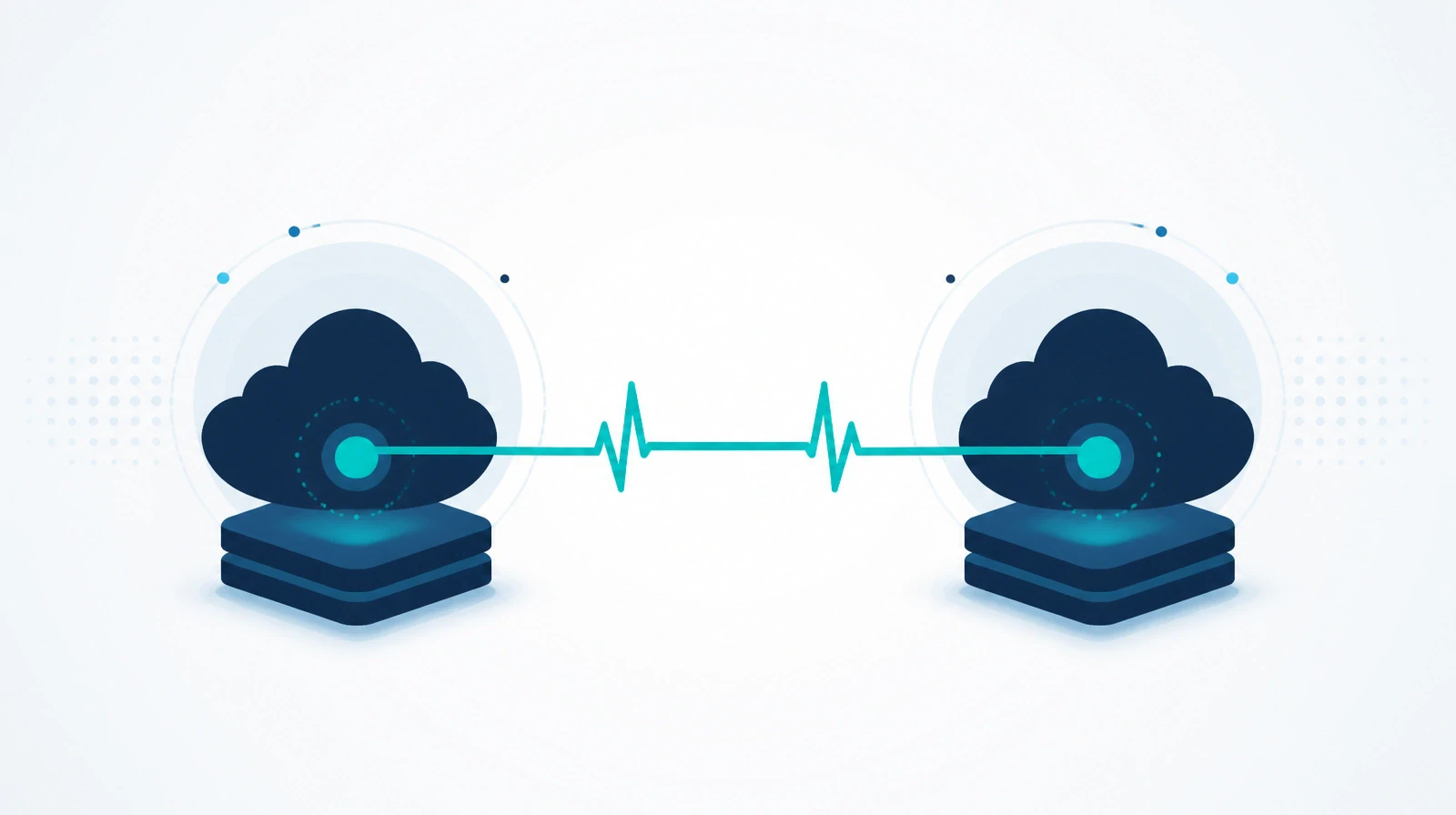
Real uptime rests on a set of inseparable factors, beginning with cloud hosting, that is, running the system on rented servers over the internet rather than internal servers. This is what enables load distribution and component redundancy, so a single server is not a single point of failure. When unexpected load arrives, it is spread across more than one server; when one fails, another picks up the work without the user noticing.
Then comes the multi-tenant architecture, where several organizations use the same system with full data isolation between them. This design means infrastructure improvements serve everyone, and cost is shared rather than borne by one organization. But what matters most about multi-tenancy is that it forces operational discipline on the vendor: they cannot halt service for one organization without the others, nor push an update for one customer at the expense of the rest, because everyone shares the same infrastructure.
On these two foundations, continuous monitoring is built, that is, automated alerting that notifies the operations team before users feel the problem, not after. The difference between "we caught the problem before the user complained" and "we responded to a user complaint" is the difference between real uptime and defensive uptime. Operational maturity is measured here, in the minutes that precede the customer's sense of the fault.
Disaster recovery, then, is a documented plan for what happens when an outage occurs, not an assumption that it will not. Every infrastructure, however tight, will face an outage one day. The difference between a vendor that takes hours to discover what happened and one that restores service within minutes lies in a ready plan that executes, not in luck.
The core point is that uptime is not a decision made once but an ongoing process that requires a team, tooling, and discipline. A system "sold" on high uptime without this infrastructure leans on hope, not design.
What is usually overlooked when choosing
Organizations fall into two traps when evaluating uptime. The first is focusing on the number alone without asking "what stands behind it?" 99.9% from a vendor with weak infrastructure means much less in practice, because the figure is measured under ideal conditions, not during peak hours or system updates. And when the vendor is asked to explain how the figure is achieved, a vague answer is a more telling signal than the figure itself.
The second trap is neglecting support. A real outage is as much an operational question as a technical one: "who do we contact, and when do they respond?" A service-level agreement defining response time and repair time is closely tied to the advertised number, and may matter more than it. An agreement that speaks of "best effort" without committing to specific windows is not an agreement in any practical sense.
The update question is also overlooked. A system that goes down for hours with every update is not truly reliable, even if its annual percentage looks good. Zero-downtime rolling updates are part of real uptime, and they are what separate a mature infrastructure from one that halts its customers in order to develop itself.
Why organizations move to the cloud in the first place
Organizations in the local market are gradually moving from on-premise systems, installed on the organization's own servers, to the cloud, driven by the cost of running internal servers and the difficulty of retaining technical talent to manage them. An internal server requires a backup generator, cooling, physical space, and a technical employee available outside working hours. The sum of these costs usually exceeds the price of a serious cloud subscription, but it is scattered across different budget lines and so does not show up clearly.
This move shifts the burden of infrastructure to the vendor, on the condition that the agreed service level is guaranteed. But moving to the cloud does not remove the responsibility of choosing. A cloud vendor offering good software on shaky infrastructure loads the organization with risks it did not budget for. Reliability is a precondition for trust in the system, not an add-on feature.
Questions to put to the vendor
When evaluating an enterprise cloud system, ask: what infrastructure stands behind the advertised uptime number? What is the actual service-level agreement, and does it bind specific response and repair windows rather than "best effort"? How do updates roll out, and do they require downtime? What automated monitoring is in place, and who watches its alerts outside working hours? On the answers to these questions, not the number alone, the decision is built.
Renewable Systems offers an enterprise SaaS service on infrastructure designed for high uptime with full isolation of each organization's data. And since a cloud system sometimes needs mobile apps to accompany it, why enterprises choose Flutter completes the picture from the angle of the interface the user touches every day.
Real uptime is built from distributed infrastructure, early monitoring, a binding agreement, a ready recovery plan, and zero-downtime updates. A vendor offering these five pillars offers uptime; one satisfied with the number alone offers a promise that still needs testing.