Protecting Contracts from Document Leaks
A major Saudi group handles a large volume of contracts and agreements each day: sale and purchase contracts, contractor agreements, leases. Each one carries financial value and details that must not reach the wrong party. When these documents are managed over email and shared folders, a leak becomes a matter of when, not if.
This study records what happened when document management moved onto a document-management system with leak protection. In this line of work especially, client confidentiality comes first, so the story is told without naming the client.
The challenge: a document left, and no one knows when
Contracts were shared as email attachments and through network folders open to a wide circle of staff. The method looks practical, but it leaves three gaps that are hard to close after the fact:
- There is no record of who opened a document or moved it outside the permitted scope.
- No trail ties each copy to who viewed it, so when a document surfaces somewhere unauthorized, its source is hard to trace.
- No control revokes access after a contract ends or a staff member leaves, so the door stays open for someone who no longer needs it.
These gaps usually surface only after an incident, by which point the damage is done.
The solution: a document system with leak protection
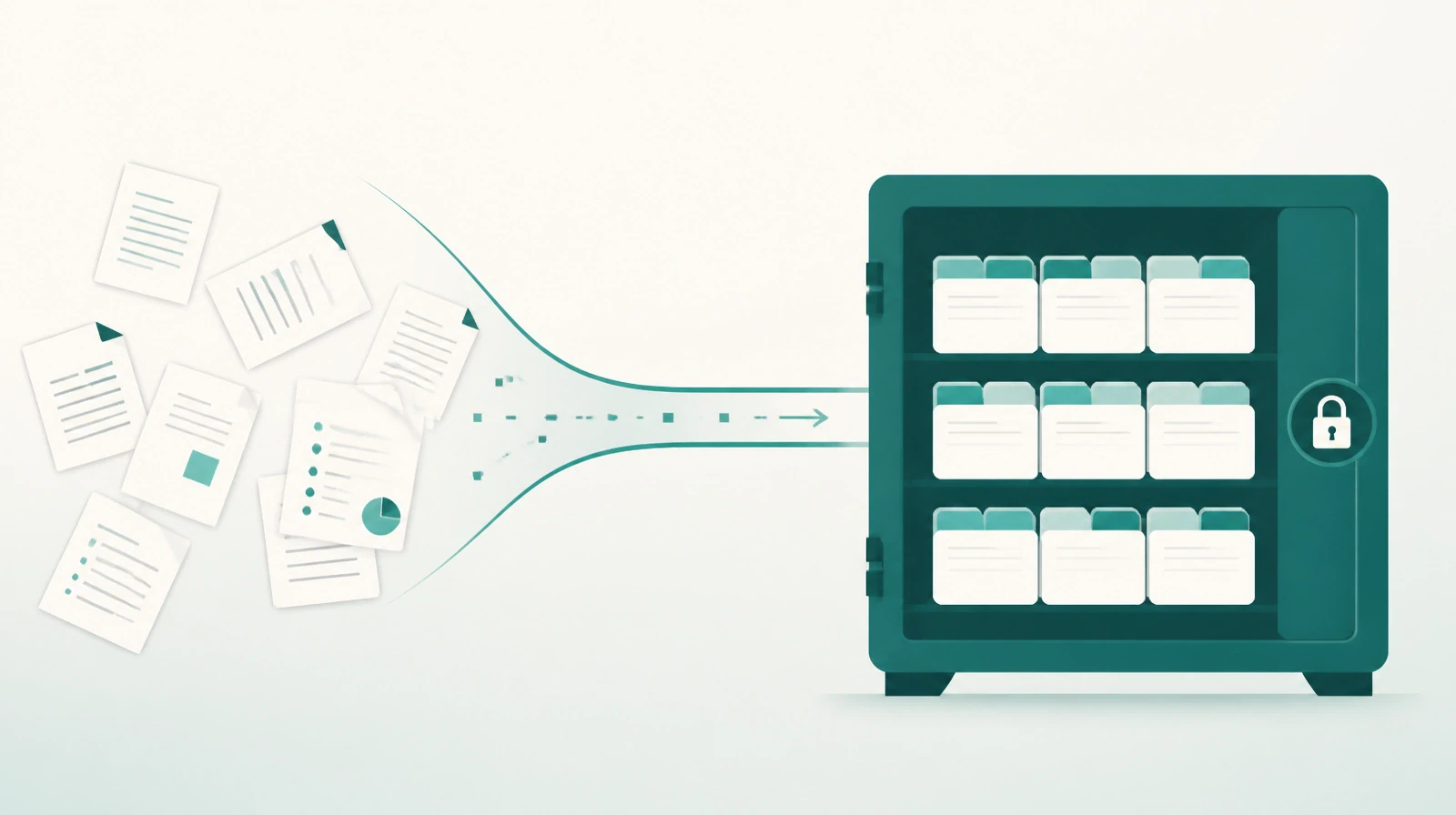
The group deployed a document and contract management system that places the document inside an environment where access is controlled and every view is traceable to its owner. Access is granted per document by need, and watermarks tie each copy to whoever viewed it, so the trail holds even if the document leaves the system.
The protection rests on restricted access backed by an audit trail that ties every action to a named user. When a document is shared, who viewed it and when is known; when a staff member's access is revoked after a contract ends or they depart, that takes effect automatically instead of hanging open.
The key point is that protection does not come from blocking sharing but from making it documented and traceable. We expanded on this in protecting contracts and documents from leaks: the difference between locking the door and knowing everyone who walked in.
The outcome: leak incidents shrink
More than 20,000 documents and contracts moved into the system. The scattered leaks that had surfaced every year became rare, and when an out-of-permission access attempt did occur, tracing its source took hours through the access log rather than remaining an unsolved puzzle.
More important, access management became an institutional decision rather than a reliance on individual memory. When a staff member leaves or a contract ends, their access is withdrawn automatically, so no file stays open for someone who is no longer a party to it.
Why leaks go unnoticed
A document in an inbox or a shared folder carries no trace of who viewed it. It gets copied, sent on, forwarded again, and afterward no one knows how many copies exist or who holds them. That nature is exactly what lets a leak pass in silence, because the usual tools produce nothing traceable.
When watermarks tie each copy to its owner, the calculation changes. Moving a document is no longer a neutral act but a documented one that traces back to its origin. That alone is enough to deter many casual leaks, because the party knows the document carries their mark.
The dimension sometimes overlooked is that real protection is not built on trust in people but on clarity of the rule. When every staff member knows their access is defined and every view is logged, the exception stands out rather than the rule. And when the exception occurs, it can be handled fast because the source is known.
In short
A contract is a document of value, and once its circulation is open without a trail, day-to-day collaboration turns into a deferred risk. Real protection comes from making every view documented and reviewable, not from closing sharing at the cost of how work moves.
If your contracts still circulate over email and shared folders, this is precisely the gap Warqa was designed to close.