Raising Meeting-Room Utilization
A large Saudi industrial group runs its headquarters with several meeting rooms shared across departments. Booking a room looks simple until requests collide, or duplicates land on the same slot, or a room sits empty all day because the person who booked it canceled their meeting without telling anyone. The waste is hard to measure but real.
This study records what happened when booking moved onto a meeting-room management system, told without the client's name to protect its confidentiality.
The challenge: a booked room and an empty room
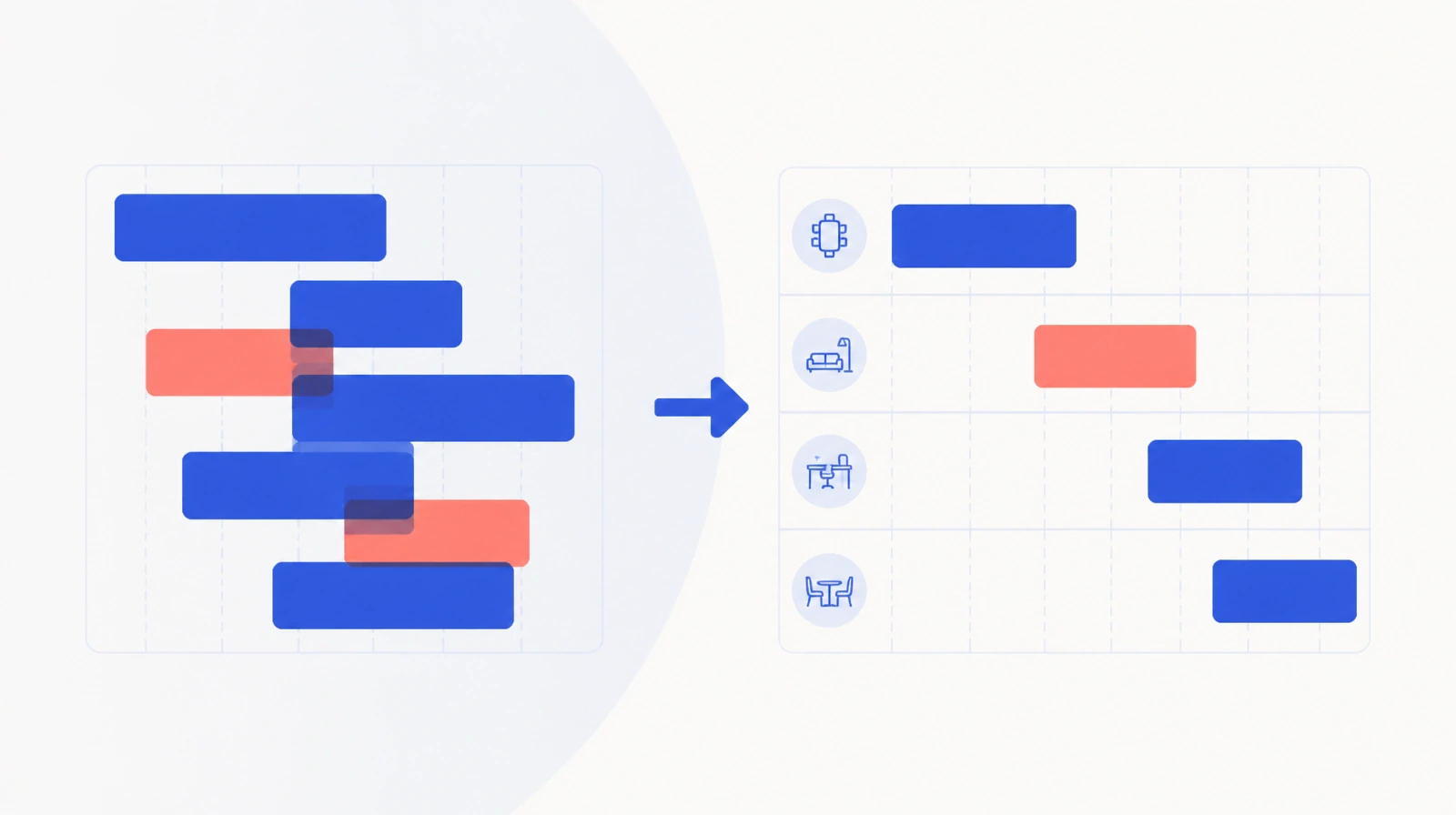
Booking ran through a shared calendar, email, and calls between the admin team and requesters. The method holds up on quiet days and collapses at peak. The clearest signs of collapse:
- Two bookings on the same room for the same slot, discovered by their owners at the door.
- A room booked and never used, while another department hunts for space to hold an urgent meeting.
- No reliable view of what is actually free right now, so people walk the corridor checking rooms.
Behind these failures sits a cost that appears in no report: meetings postponed, decisions stalled, staff spending time on coordination that should be trivial.
The solution: unified booking that blocks conflicts before they happen
The group deployed a meeting-room management system that turns booking from manual coordination into conflict-free scheduling. A staff member picks the room and the time, the system checks availability at once, and the booking is recorded before it can ever reach a clash.
This removes double-booking at the root, since the system does not permit two concurrent bookings on the same resource. When a meeting is canceled or postponed, the room returns to available automatically instead of sitting booked on paper for someone who will not show.
For management, room utilization becomes visible rather than a guess. What we described at length in how organizations cut meeting-room waste applies here: the gain is not faster booking but clearer utilization.
The outcome: an end to double-booking
After the move onto the system, booking conflicts disappeared entirely; what used to happen several times a week has stood at zero since the first month. Rooms no longer stay booked for meetings that were canceled, and actual room utilization climbed from around 40% before deployment to above 70% within six months.
More important, room utilization became visible. When a department needs a room for an urgent meeting, what is free is known at once, and decisions move without waiting on a phone round. The waste that never appeared in a report is now exposed and addressable.
What unified booking revealed
Before deployment, the organization assumed the problem was "not enough rooms". The prevailing diagnosis was to seek additional rooms, a costly fix that presumes demand is the constraint. Once utilization became visible, it turned out that roughly a third of bookings were no-shows, and that peak hours clustered into specific windows while other windows stayed near empty.
This shift in diagnosis is the benefit that goes unnoticed. The system does not only resolve conflicts; it exposes the true pattern of use. And once the decision-maker knows exactly where the waste sits, adding a room becomes one option among several instead of the only assumption.
Then there is the load lifted from the admin team. They used to spend part of their day untangling conflicts and chasing booking confirmations. After deployment that time goes into higher-value work, and the role turns from putting out daily fires to strategic coordination of the rooms.
In short
A meeting room is a scarce resource in any office, and managing it by hand tolerates waste because the waste is invisible. Once booking and utilization are documented, the resource turns from a source of daily friction into a dependable tool.
If your rooms still run on email and a hand-maintained calendar, this is exactly the problem Ejtma was built to solve.